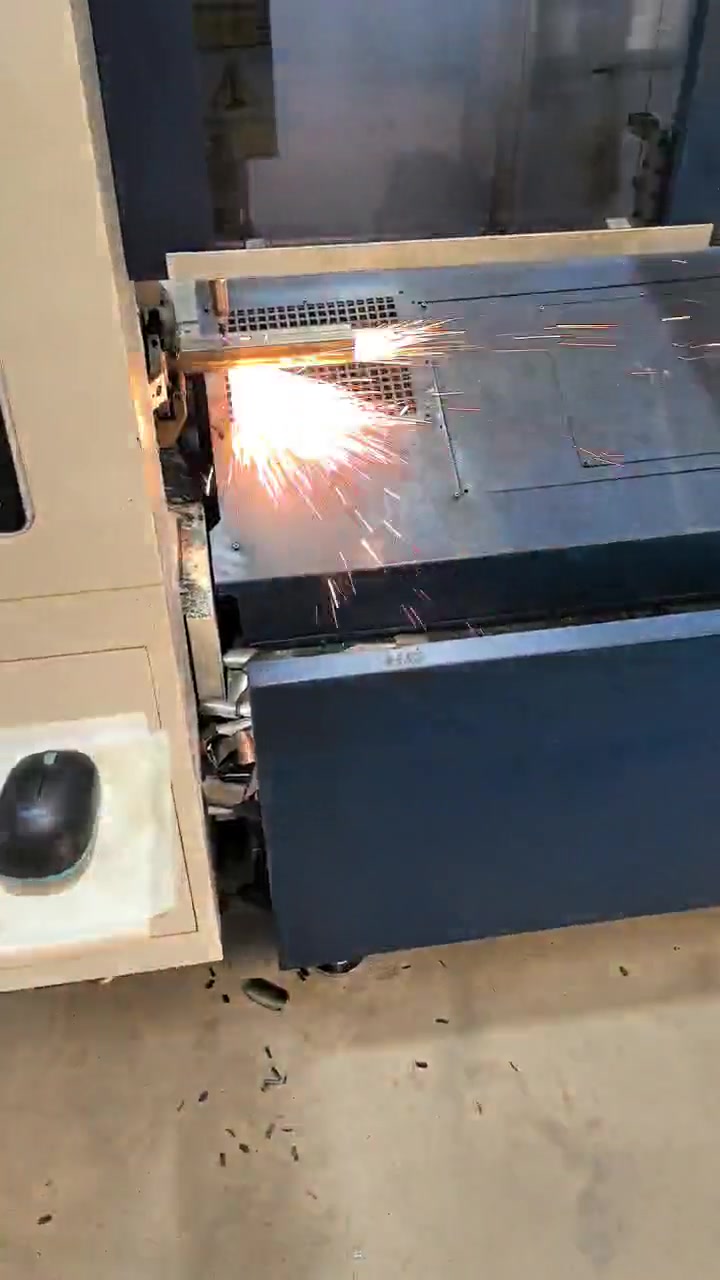
Most school desk and chair sets look identical in a quotation. They are not. The differences sit in four places a spec sheet usually hides: the frame wall thickness, what the edge banding is made of, how the metal was pre-treated before painting, and what the timber was dried to before assembly.
This guide walks through the seven checks we would make ourselves before placing an order — with the numbers that matter, and the questions that separate a tender-ready supplier from a trading company quoting from a catalogue.
1. Frame: bent tube versus welded square tube
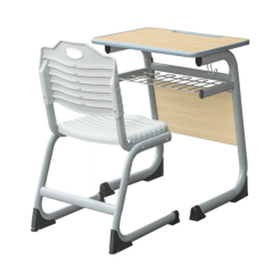
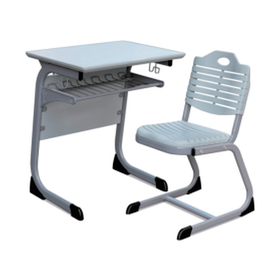
Desk frames are usually one of two types. Welded square tube is cheap and fast, but the welds are where movement starts: every school that has replaced chairs after two years can point to a cracked joint at the leg-to-seat connection.
A single-piece bent tube frame has no weld at the highest-stress corner. Ask for the wall thickness in millimetres, not “heavy duty”. For a classroom desk, 1.2 mm is a floor, not a target. Ask too whether the tube is cold-rolled steel — thinner cold-rolled steel outperforms thicker hot-rolled stock at the same weight.
2. Board and edge banding: the part buyers forget
Desk tops are normally E0 or E1 grade particleboard or MDF with a melamine face. Both are acceptable in most markets. What is rarely specified is the edge banding — and that is the first thing to fail in a humid classroom.
PVC edge banding is common. Recycled PVC is cheaper still, and it goes brittle, yellows under UV and lifts at the corners within a season or two. Ask one question: is the edge banding virgin PP or recycled PVC? Virgin PP holds its colour, resists moisture and stays flexible at the radius corners where desks get knocked.
Also ask for the board’s formaldehyde class in writing — E1 as a minimum, E0 where the destination market requires it — and confirm it is the board supplier’s own test report, not a generic certificate.
3. Metal pre-treatment: what happens before the paint
Powder coating adhesion is decided before the powder goes on. A frame that was wiped down and sprayed will chip at the welds and rust from the inside out. The correct sequence is shot blasting, then high-temperature degreasing, then electrostatic powder coating cured at temperature.
Shot blasting removes mill scale and gives the steel a mechanical key. Degreasing removes the drawing oils that cause coating defects. If a supplier cannot describe this sequence in order, the paint is decorative rather than protective.
4. Timber drying: the number nobody quotes
For any set with a timber component — a plywood seat, a solid wood desktop, a bunk bed frame — moisture content decides whether the part stays flat through its first winter in a heated building.
We dry timber at 120 °C for 48 hours and assemble at a finished moisture content of 12%. Ask your supplier for their drying temperature, drying time and target moisture content. A supplier who answers “kiln dried” without a number has not measured it.
5. Load ratings and gas lift class
For height-adjustable chairs, the gas lift is the single most safety-relevant component. Specify Class 2 minimum, Class 3 for daily heavy use, and ask for the lift manufacturer. An unmarked lift is an unverified lift.
For the base, a static load figure is the useful number: a five-star base tested to 1,000–1,200 kg static load is what a 60 kg student leaning back on two legs actually needs. “Extra strong” is not a specification.
6. MOQ, lead time and payment terms
Get these in the first reply, not after the price negotiation:
- MOQ — for desk and chair sets, 50 sets is a typical production minimum; mixed models can usually share a container.
- Lead time — around 25 days from deposit for standard sets; longer if the frame colour is custom.
- Payment — 30% deposit with 70% before shipment is the norm for a first order.
- Incoterm — confirm whether the quote is EXW, FOB Ningbo or DDP, because the difference between them is usually larger than the price difference between two suppliers.
7. What to put in your RFQ so the quotes are comparable
Most quotes come back incomparable because the RFQ left the variables open. Include these and the comparison becomes arithmetic rather than guesswork:
- Frame wall thickness (mm) and tube type (bent or welded)
- Board grade (E0/E1), thickness (mm) and edge banding material
- Metal finish sequence and coating thickness (μm)
- Timber moisture content target (%)
- Gas lift class, if height-adjustable
- Static load requirement for the base
- Carton dimensions and units per carton — this drives freight more than unit price does
Frequently asked
How many desk and chair sets fit in a 40HQ container?
It depends almost entirely on knock-down design and carton packing rather than on the desk itself. Ask for units per carton and carton dimensions, then calculate volume — a supplier quoting only weight per set is not giving you what you need.
Is E0 board necessary?
Not in every market. E1 meets most national requirements; E0 is specified where the buyer’s own standard or the end client demands it. Confirm the requirement with the project’s specifier before paying a premium for it.
Can the frame colour be customised?
Yes, within a powder-coating batch minimum. Custom colours add lead time and usually a small surcharge; ask for the batch size before promising a colour to your client.
Next step
Dafengche has manufactured school furniture in Ningbo since 1999. If you are preparing an RFQ for classroom desk and chair sets, send us the specification list above and we will reply with a quotation that answers each line — including the ones most suppliers leave blank.
Browse our classroom desk and chair range, or look at the C-type bent-tube desk and chair set 2301 and the 2401 model for the construction described above.